
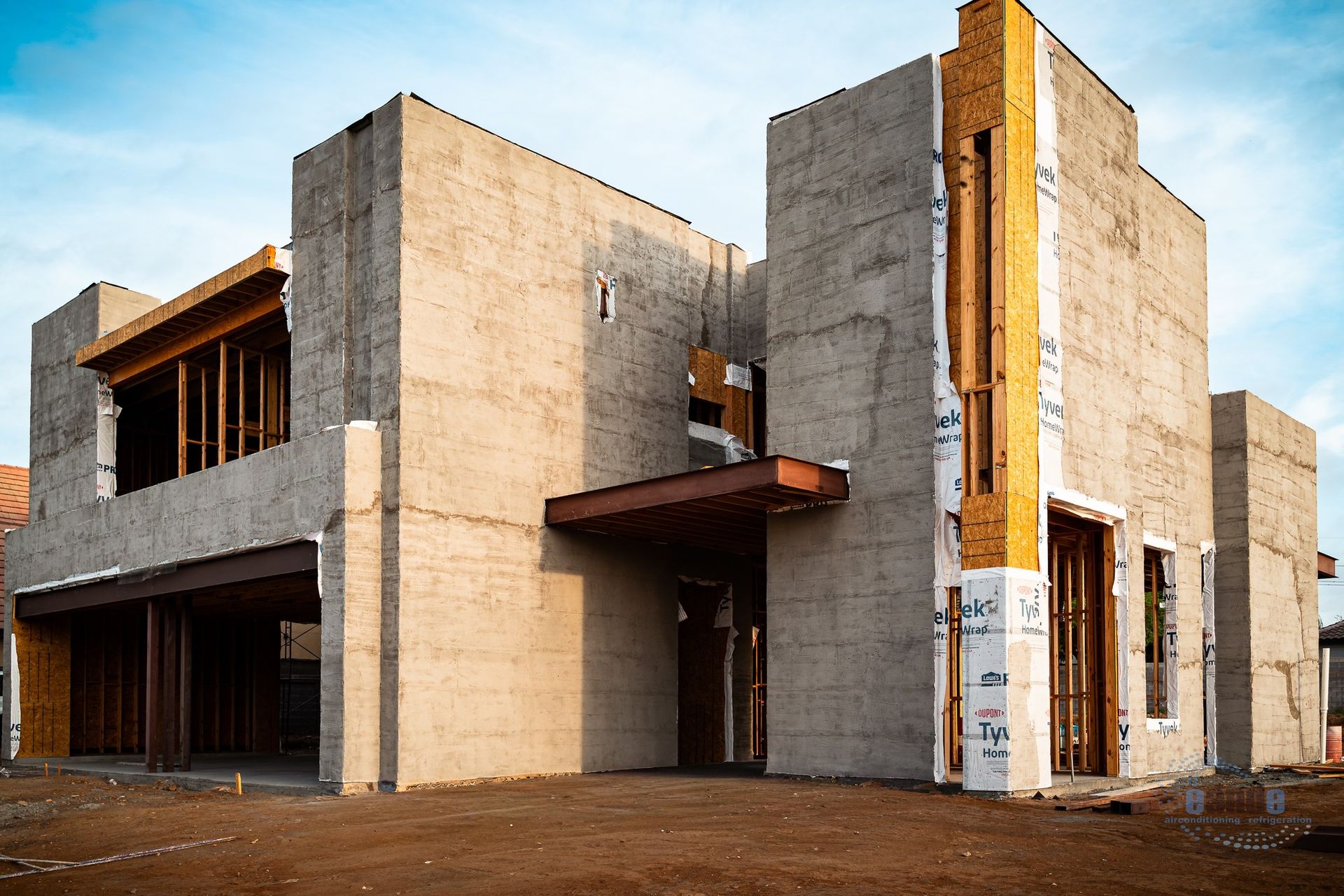
Climate Systems Designed Before Walls Close
New Construction HVAC in Laredo and throughout South Texas for residential builds requiring equipment selection and ductwork layout coordination
Proper system sizing for new construction starts with Manual J load calculations performed after framing completes so wall orientation, window placement, and insulation specifications are known rather than estimated. E and E Air Conditioning coordinates with builders to route ductwork before drywall installation, position equipment in locations with adequate service access, and size electrical service to handle compressor startup loads without voltage drop. Early involvement prevents the comfort and efficiency problems that result when HVAC installation becomes an afterthought during the building process.
System design includes calculating heat gain from each room's window area and orientation, determining duct sizes that deliver designed CFM to each supply register without excessive velocity noise, selecting equipment capacity that matches the calculated load rather than using generic tons-per-square-foot rules, and planning condensate drain routing that prevents standing water in pan or line. In Laredo, Boerne, San Antonio, and surrounding areas, south and west-facing windows generate significantly more cooling load than north-facing glass, so duct design accounts for these differences with appropriately sized supply runs to each room.
Schedule project planning to review system layout options and equipment specifications during your build timeline.
What Proper System Planning Prevents
Design work involves selecting supply register locations that avoid furniture placement conflicts, routing return air pathways that maintain balanced airflow without creating pressure imbalances between rooms, and positioning the air handler where filter changes and service access remain possible after interior finishes are complete. Ductwork installed in conditioned space rather than vented attics eliminates the 15 to 25 percent energy loss that occurs when cool air travels through sheet metal surrounded by 130-degree air.
When the system starts operation after construction completes, you notice even temperatures throughout the home without hot or cold rooms, quiet operation because properly sized ducts prevent the whistling and rumbling that comes from excessive air velocity, and lower energy bills from the start because correctly sized equipment runs efficiently rather than short-cycling or running continuously. The system reaches thermostat setpoints quickly and maintains them without the constant adjustments that occur when capacity and load don't match.
New construction projects include duct pressure testing before drywall installation to identify leaks at connection points, equipment startup with documented baseline performance measurements, and coordination with the home's air sealing and insulation work to verify that HVAC capacity matches the building envelope's actual performance. Energy-efficient equipment selection reduces long-term operating costs compared to minimum-efficiency models.
Answers to Frequent Service Questions
Understanding how HVAC planning integrates with the construction timeline helps builders and homeowners coordinate effectively.
What happens during the load calculation process?
Manual J calculations use the home's square footage, ceiling heights, window U-values and solar heat gain coefficients, insulation R-values in walls and attic, air infiltration rates, and occupancy levels to determine the actual heating and cooling capacity required rather than estimating based on square footage alone.
How does duct placement affect system performance?
Ducts routed through conditioned space rather than vented attics eliminate most energy loss, but this requires coordination with framers to create soffit spaces or utilize floor joist bays before those areas become inaccessible.
When should equipment selection happen during construction?
Choosing specific models after architectural plans are finalized but before framing begins allows the HVAC contractor to verify that equipment dimensions fit the planned mechanical closet and that selected duct routes work with the framing layout.
Why does Laredo's climate require different design considerations than humid regions?
The extended cooling season here with frequent temperatures above 95 degrees means systems run for longer annual hours, so efficiency differences between equipment models translate to larger cost variations over the system's lifespan compared to locations where AC runs only three months per year.
What documentation should homeowners receive at project completion?
Final documentation includes the load calculation worksheet showing how capacity was determined, duct layout drawings with register locations and CFM delivery to each room, equipment model numbers and warranty information, and baseline performance measurements including supply and return temperatures and refrigerant pressures.
E and E Air Conditioning provides detailed project planning and installation coordination for residential new construction throughout the Laredo area. Contact us at (956) 284-6867 to discuss timeline integration and equipment options for your build.