Systems Sized for Decades of Performance
HVAC Installation in Laredo, San Antonio, and throughout South Texas for properties replacing aging equipment, upgrading to higher-efficiency systems, or installing climate control in new construction
Installing new HVAC equipment correctly requires more than connecting refrigerant lines and wiring a thermostat—the system must be sized to match your property's actual cooling load, ductwork must deliver designed airflow to each room, and refrigerant must be charged to manufacturer specifications using measured superheat and subcooling values rather than gauge pressure alone.
E and E Air Conditioning installs central air systems, heat pumps, and mini-split units for both residential and light commercial properties in Laredo, Fredericksburg, New Braunfels, and surrounding areas where proper setup determines whether equipment delivers its rated efficiency or struggles to maintain comfort while consuming excess energy. You notice the difference between correct installation and shortcuts in how quickly rooms reach set temperatures, how often the system cycles, and whether monthly utility costs align with the equipment's published SEER rating.
System options include traditional split systems with outdoor condensers and indoor air handlers, heat pumps that provide both cooling and heating from a single unit, and ductless mini-splits for spaces where installing ductwork isn't practical. Selection depends on your property's existing infrastructure, whether you need heating capability, and whether adding or modifying ductwork fits within renovation budgets and structural constraints.
Request a detailed estimate based on Manual J load calculations and equipment recommendations specific to your property.
What Changes After Installation Completes
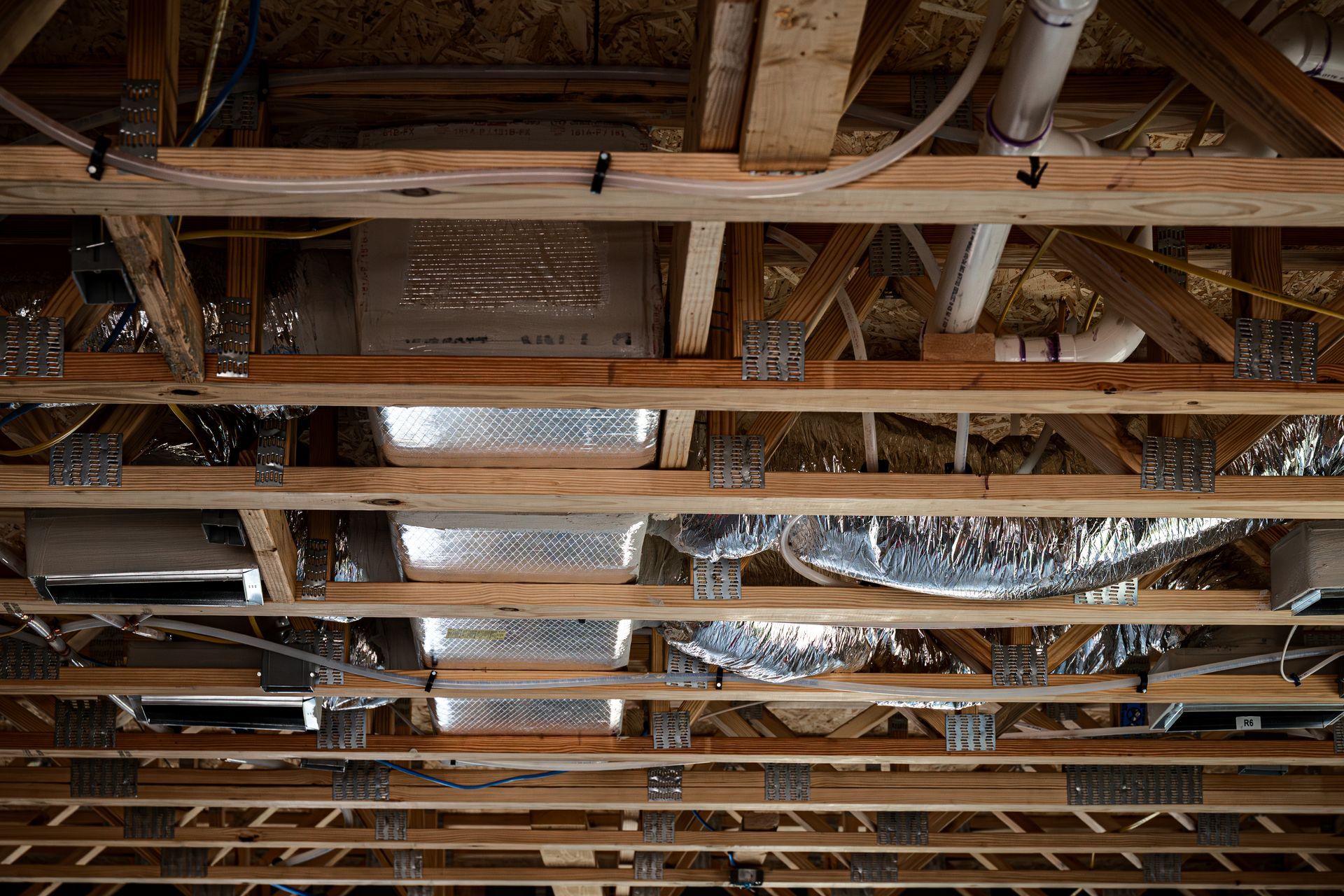
Professional installation begins with Manual J load calculations that account for your building's square footage, insulation levels, window area and orientation, occupancy patterns, and internal heat sources to determine the correct equipment tonnage. Installers verify ductwork sizing matches airflow requirements, seal all joints to prevent conditioned air loss, install proper refrigerant line insulation to prevent efficiency losses, and pressure-test lines before introducing refrigerant. Final setup includes charging the system using digital manifolds while measuring temperature splits across the evaporator coil and verifying voltage at all motor terminals under operating load.
Once the system operates correctly, indoor temperatures stabilize within two degrees of thermostat settings throughout the day, humidity levels drop to comfortable ranges even during South Texas summers, and the outdoor unit runs in consistent cycles rather than starting and stopping every few minutes. E and E Air Conditioning tests airflow at supply registers to confirm proper CFM delivery and calibrates thermostat anticipators so the system maintains steady temperatures without temperature swings that waste energy and reduce comfort.
New installations typically include manufacturer warranties covering parts for five to ten years depending on equipment tier, but warranty coverage requires professional installation and documented maintenance to remain valid. Energy savings compared to older systems show up immediately on utility bills since modern equipment operates at SEER ratings fifteen to twenty-five percent higher than units manufactured before 2010, and improved humidity control reduces that clammy feeling that makes South Texas homes uncomfortable even at reasonable temperatures.
Answers to Frequent Service Questions
Property owners considering new equipment want to understand options, costs factors, and what determines long-term system performance.
What determines whether a heat pump or traditional air conditioner makes more sense for South Texas properties?
Heat pumps provide both cooling and heating from a single outdoor unit, making them cost-effective in climates with mild winters where backup electric heat rarely runs. Traditional air conditioners paired with gas furnaces deliver lower operating costs when heating demand is high, but Laredo's limited heating season typically favors heat pump economics.
How does ductwork condition affect new system performance?
Even perfectly sized equipment underperforms when ductwork leaks conditioned air into attics or crawlspaces, or when undersized ducts restrict airflow below design specifications. Installation work often includes duct sealing, insulation upgrades, and sometimes duct replacement in sections where deterioration prevents proper air delivery to living spaces.
When do mini-split systems provide better solutions than central air?
Properties without existing ductwork, room additions where extending ducts isn't practical, and buildings where different areas need independent temperature control benefit from ductless mini-splits that mount indoor air handlers directly in conditioned spaces. Installation avoids the cost and disruption of adding ductwork while providing efficient zone control.
What testing confirms an HVAC system was installed correctly in South Texas?
Technicians measure refrigerant superheat and subcooling to verify proper charge, test temperature splits across evaporator and condenser coils to confirm heat transfer efficiency, measure airflow at supply registers to verify CFM delivery matches design requirements, and verify electrical connections deliver correct voltage under operating load. These measurements determine whether the system will deliver rated capacity and efficiency.
How long do professionally installed HVAC systems typically last in South Texas?
Central air systems operated year-round in cooling climates typically provide twelve to fifteen years of reliable service when maintained properly, while heat pumps handling both cooling and heating may require replacement after ten to twelve years due to higher annual runtime hours. Equipment operating in harsh conditions or without regular maintenance fails significantly earlier.
E and E Air Conditioning provides installation estimates that include equipment specifications, necessary ductwork modifications, and performance testing procedures that confirm your new system operates as designed. Schedule a system consultation to review options for your property and receive accurate tonnage calculations based on measured load requirements.