Diagnostics That Find the Actual Problem
HVAC Repairs in Laredo and throughout South Texas for systems experiencing cooling failures, airflow restrictions, or malfunctions during periods of peak demand
An HVAC system that stops cooling on a hundred-degree afternoon creates an emergency that requires accurate diagnosis and repair within hours rather than days, but effective troubleshooting depends on understanding how refrigerant pressures, airflow volumes, and electrical loads interact to produce the observed symptoms. E and E Air Conditioning diagnoses and repairs cooling failures, airflow issues, and system malfunctions by testing components systematically rather than replacing parts based on guesswork, an approach that saves time and money while restoring comfort quickly. Experienced technicians recognize that identical symptoms—no cooling—can result from failed capacitors, tripped breakers, frozen evaporator coils, refrigerant leaks, failed contactors, or compressor failures, and each cause requires different repair strategies.
Common repair situations include systems that run but don't cool because refrigerant leaked out or compressors failed, systems that won't start because capacitors weakened or contactors pitted, systems that ice up because airflow dropped from dirty filters or failed blower motors, and systems that short cycle because thermostats failed or refrigerant charges are incorrect. Diagnostics measure what's actually happening rather than assuming causes.
Call for immediate repair service when your system stops maintaining comfortable temperatures or fails to start in Laredo, San Antonio, New Braunfels, and surrounding areas.
What Happens During HVAC Repair Calls
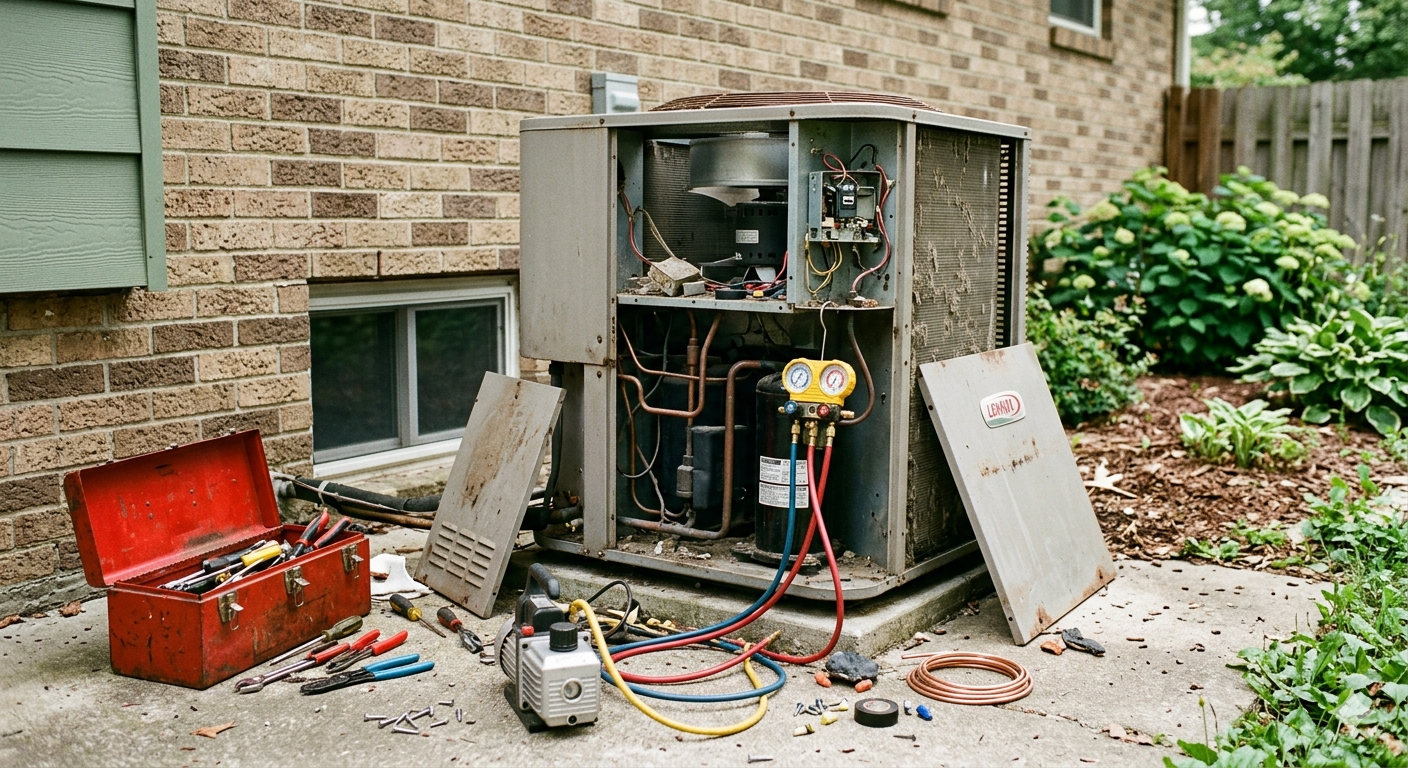
Repair work begins with measuring system behavior—refrigerant pressures at both high and low sides, amperage draw at compressor and fan motors, voltage at contactors and capacitors, temperature splits across indoor and outdoor coils, and airflow volumes at supply registers. These measurements identify which component failed or which condition prevents normal operation. Technicians carry common failure parts including capacitors, contactors, and thermostats that can be replaced immediately, while less common repairs may require ordering compressors, air handlers, or control boards for next-day installation.
Once repairs are completed and the system runs through full cooling cycles, indoor temperatures drop steadily toward thermostat settings, humidity levels decrease as the evaporator coil removes moisture, and the outdoor unit operates without unusual sounds or vibrations that indicate remaining problems. Testing confirms refrigerant pressures match manufacturer specifications, electrical components deliver proper voltage, and airflow reaches design volumes throughout the duct system.
Some repairs address immediate failures while revealing underlying conditions that will cause future problems—for example, replacing a failed compressor on a system with restricted airflow from never-changed filters means the new compressor faces the same conditions that damaged the original. Complete repairs include identifying and correcting those contributing factors to prevent recurrence and extend the life of replaced components.
Common Questions About This Service
Property owners dealing with system failures need to understand what's involved, how long repairs take, and what determines whether repair or replacement makes sense.
What causes HVAC systems to fail most often during South Texas summers?
Extended operation at maximum capacity during months of triple-digit temperatures stresses compressors, weakens capacitors faster than they deteriorate in moderate climates, and exposes any marginal components that might survive in areas with shorter cooling seasons. Systems that skipped maintenance develop dirty coils that force components to work harder and fail sooner under heat stress.
How do technicians determine whether refrigerant loss indicates a minor leak or major system damage?
Pressure testing with nitrogen after evacuating refrigerant reveals leak locations and severity—slow leaks at flare fittings or valve cores can be repaired economically, while leaks in evaporator coils or compressor housings often cost more to repair than the remaining equipment value justifies. E and E Air Conditioning uses electronic leak detectors and pressure decay testing to locate leaks before adding refrigerant.
When does replacing individual components make more sense than replacing the entire system?
Repairs costing less than half of replacement value on systems less than ten years old typically provide good value, while expensive repairs like compressor replacement on systems older than twelve years often make less financial sense than installing new equipment with higher efficiency and full warranty coverage. Age, overall condition, and refrigerant type all factor into repair-versus-replace decisions.
What repair situations require immediate attention versus those that can wait for scheduled appointments?
Complete cooling loss during extreme heat creates safety concerns and requires same-day service, while reduced cooling capacity or systems that still function but show declining performance can usually wait for next-available appointments. Burning smells, sparking sounds, or repeatedly tripping breakers indicate electrical hazards requiring immediate shutdown and emergency service.
How long do common HVAC repairs typically take to complete?
Capacitor and contactor replacements usually require thirty to sixty minutes including testing, thermostat replacement takes similar time, and blower motor replacement typically needs two to three hours for removal and installation. Compressor replacement, refrigerant leak repairs, and control board replacements often require half-day to full-day appointments depending on access and component availability.
E and E Air Conditioning provides diagnostic service that identifies the actual cause of system failures and presents repair options with realistic cost and timeline information. Contact us when your system shows signs of malfunction or fails to maintain comfortable conditions so we can restore reliable operation quickly.